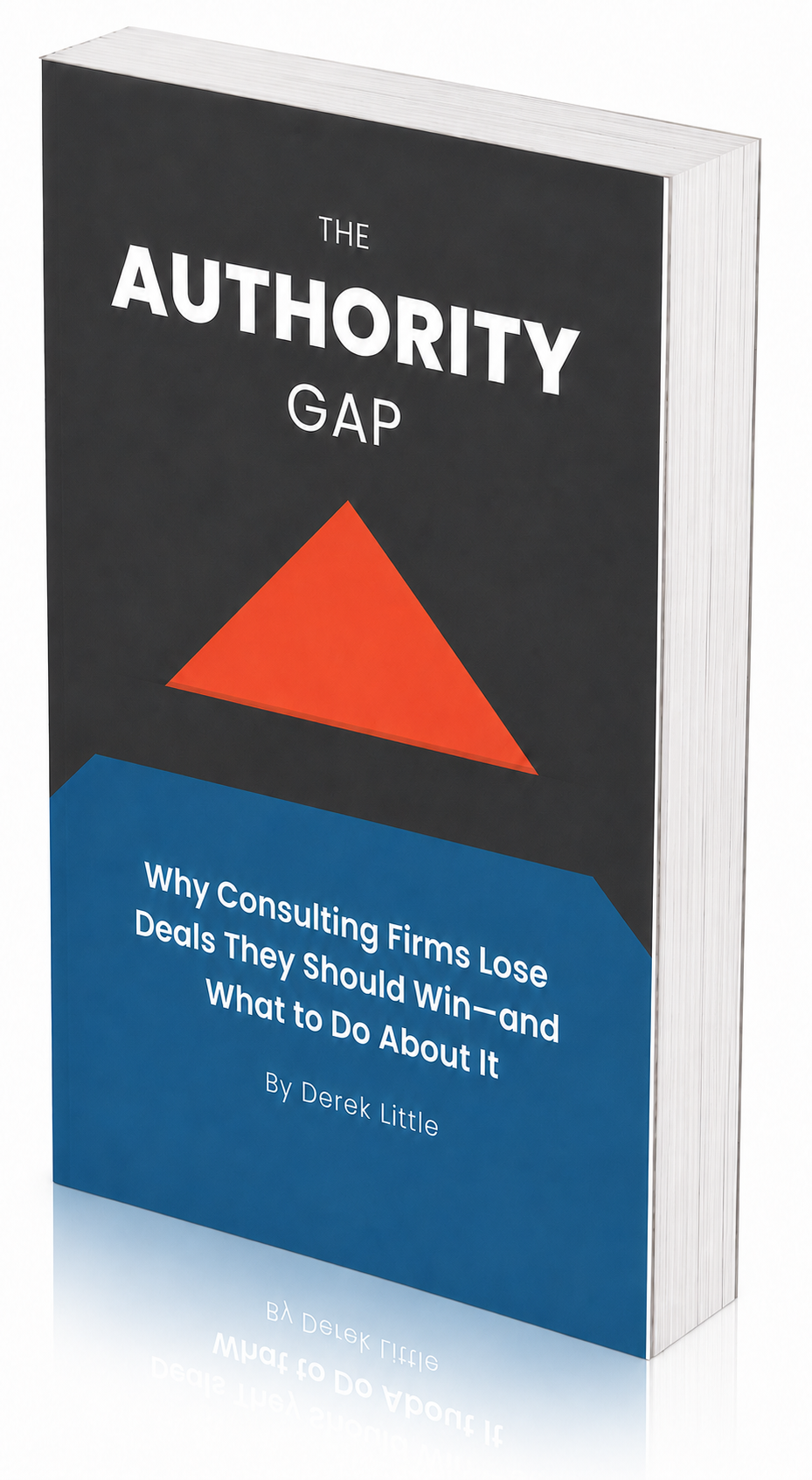



I help B2B consulting firms close the Authority Gap before buyers choose someone else.
Victoria Fide Consulting had serious expertise, ambitious enterprise thinking, and a clear belief about where digital transformation was heading. The CEO had worked on 200 digtal transformations.
The challenge was not capability.
The challenge was interpretation.
The firm’s ideas, services, and strategic point of view needed to become easier for the market to understand, remember, and trust.
Like many consulting firms, Victoria Fide had the raw material of authority: experience, insight, frameworks, and conviction.
But raw expertise does not automatically create market confidence.
The work was about turning that expertise into a clearer authority platform.
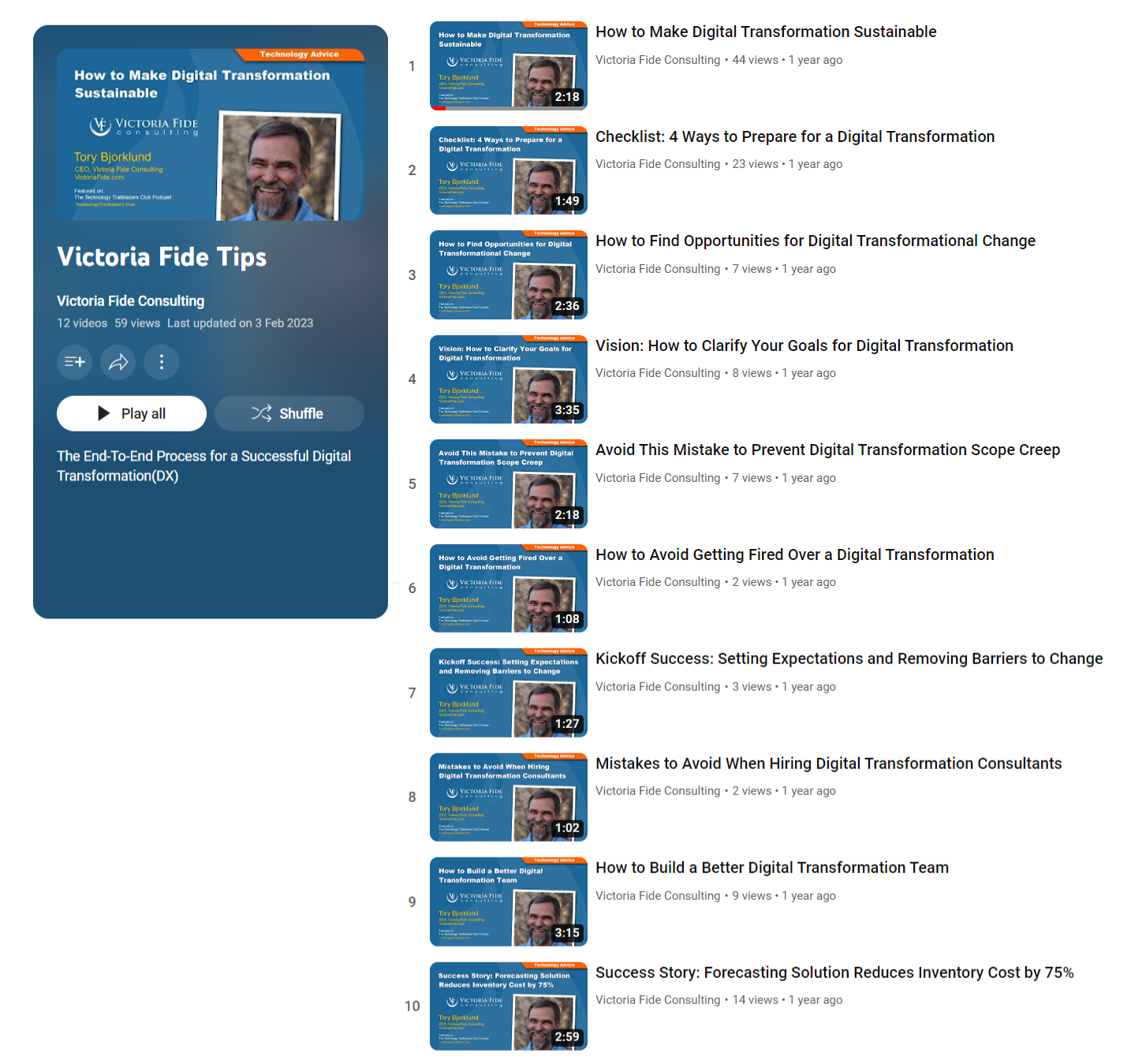
To clarify and elevate Victoria Fide’s enterprise positioning, we began with a long-form executive interview series designed to extract defensible insight from the CEO’s transformation experience. The discussion was segmented into 12 focused video insights and organized into a YouTube playlist, creating a structured authority library that could be shared across LinkedIn and used in enterprise conversations.
The goal wasn’t promotion — it was to codify expertise into visible, reusable proof assets.
To strengthen positioning consistency, we developed a structured Brand Book informed by a team-wide strategy survey. The goal was to clarify Victoria Fide’s core promise, enterprise audience alignment, transformation philosophy, and messaging standards. The document became a working authority guide — shaping language, visuals, content themes, and client experience — ensuring their external signal matched their intended enterprise ambition.
(Note: The full Brand Book remains confidential.)
To formalize their transformation methodology, we developed a long-form “Blue Paper” grounded in ten executive interviews with the CEO. The research surfaced recurring causes of digital transformation failure — along with ten preventative principles drawn from real-world experience. I structured the initiative through a formal creative brief and managed external writer and design support to ensure the final asset reflected enterprise-level thinking.
The objective wasn’t content volume — it was to codify proprietary insight into a defensible authority asset.
To extend the authority of the Blue Paper, I developed and wrote a structured article series unpacking each of the ten transformation failure patterns in depth. The series used a consistent, sage-inspired narrative device to make complex enterprise risks more accessible while reinforcing Victoria Fide’s strategic lens.
Content followed a long-range editorial calendar, sequencing insights intentionally to nurture executive audiences over time rather than rely on isolated posts.
To support long enterprise buying cycles, we built a LinkedIn-led nurturing system tied directly to their authority assets. New strategic connections were invited into a structured LinkedIn newsletter, creating consistent executive visibility through both platform and email notifications.
Each edition reinforced transformation themes, referenced the Blue Paper, and offered a structured consultation pathway — ensuring authority assets were not static but integrated into outreach conversations.
A predictable percentage of targeted connections converted into subscribers, validating engagement — though enterprise deal progression required deeper proof signals beyond visibility alone.
"I am pleased with how the content has turned out and how the LinkedIn campaign has progressed."
The work did not create authority from nothing.
It helped organize authority that was already there.
Victoria Fide gained a clearer point of view, a stronger content foundation, and a more consistent way to show the market how it thought about enterprise digital transformation.
Expertise is internal.
Authority is external.
A consulting firm can have strong thinking, strong services, and serious ambition, but still struggle if buyers cannot quickly understand what the firm owns, why it matters, and why it is credible.
Victoria Fide shows the first major lesson of The Authority Gap: expertise does not become authority until it is translated into signals buyers can understand, trust, and remember.