
I help B2B consulting firms close the Authority Gap before buyers choose someone else.
Dux-Soup helps users automate and manage LinkedIn outreach. But outreach activity alone does not create trust. Many firms can send more messages, grow their network, and increase visibility without creating better conversations.
The real issue is buyer confidence.
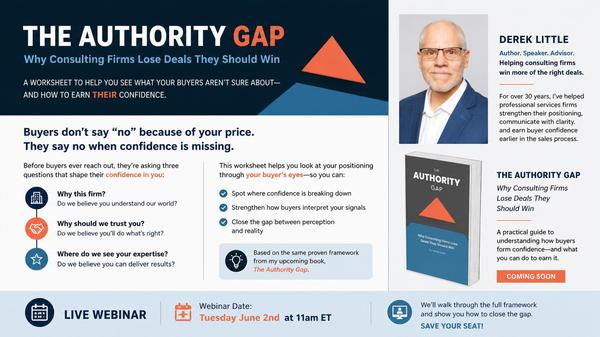
Before a prospect responds, they are already interpreting signals: Is this clear? Is it relevant? Is this credible? Do I trust this enough to engage? The workshop was built around that problem.
The goal was to help Dux-Soup users see why LinkedIn outreach works better when it is supported by stronger authority signals.
Dux-Soup wanted a practical workshop that could help users improve the results of LinkedIn outreach.
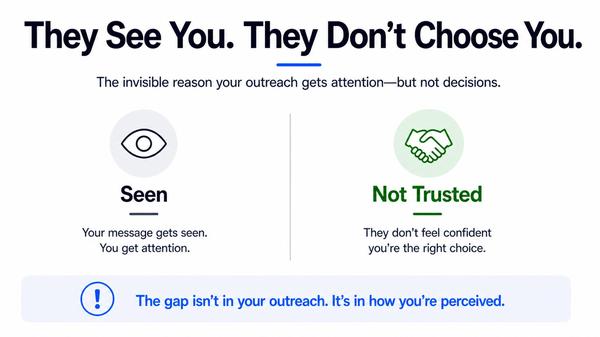
Many users were focused on activity: more profile visits, more connections, more messages. But activity only works when buyers can understand, trust, and respond to the signals behind it.
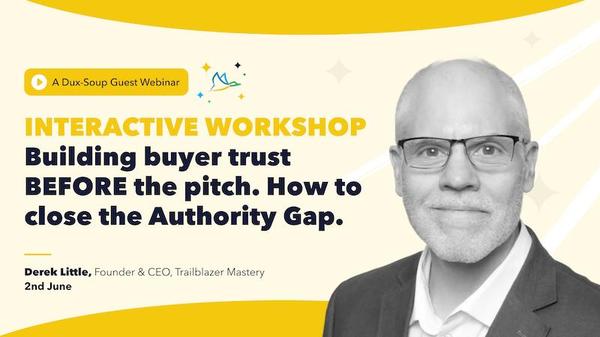
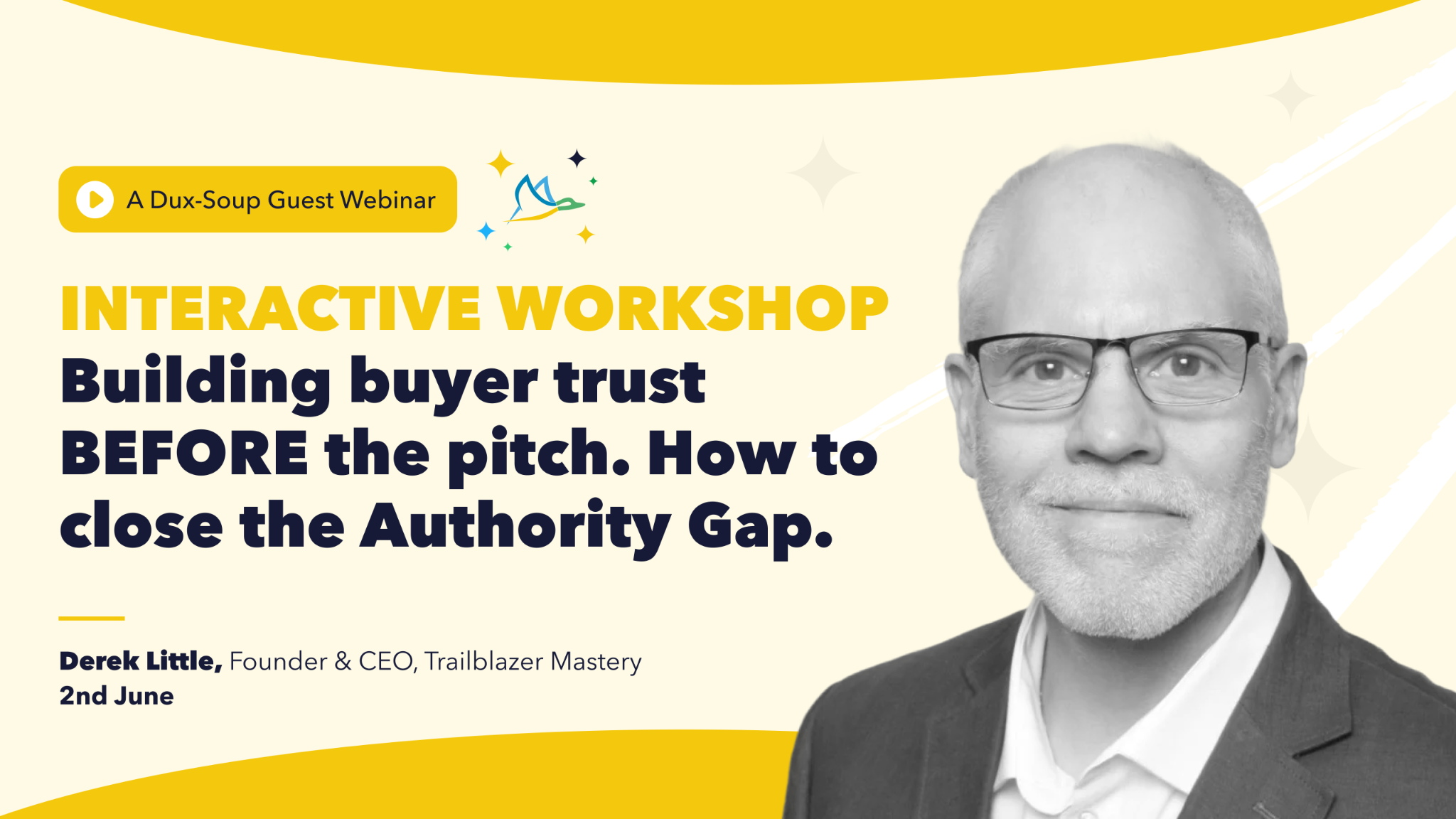
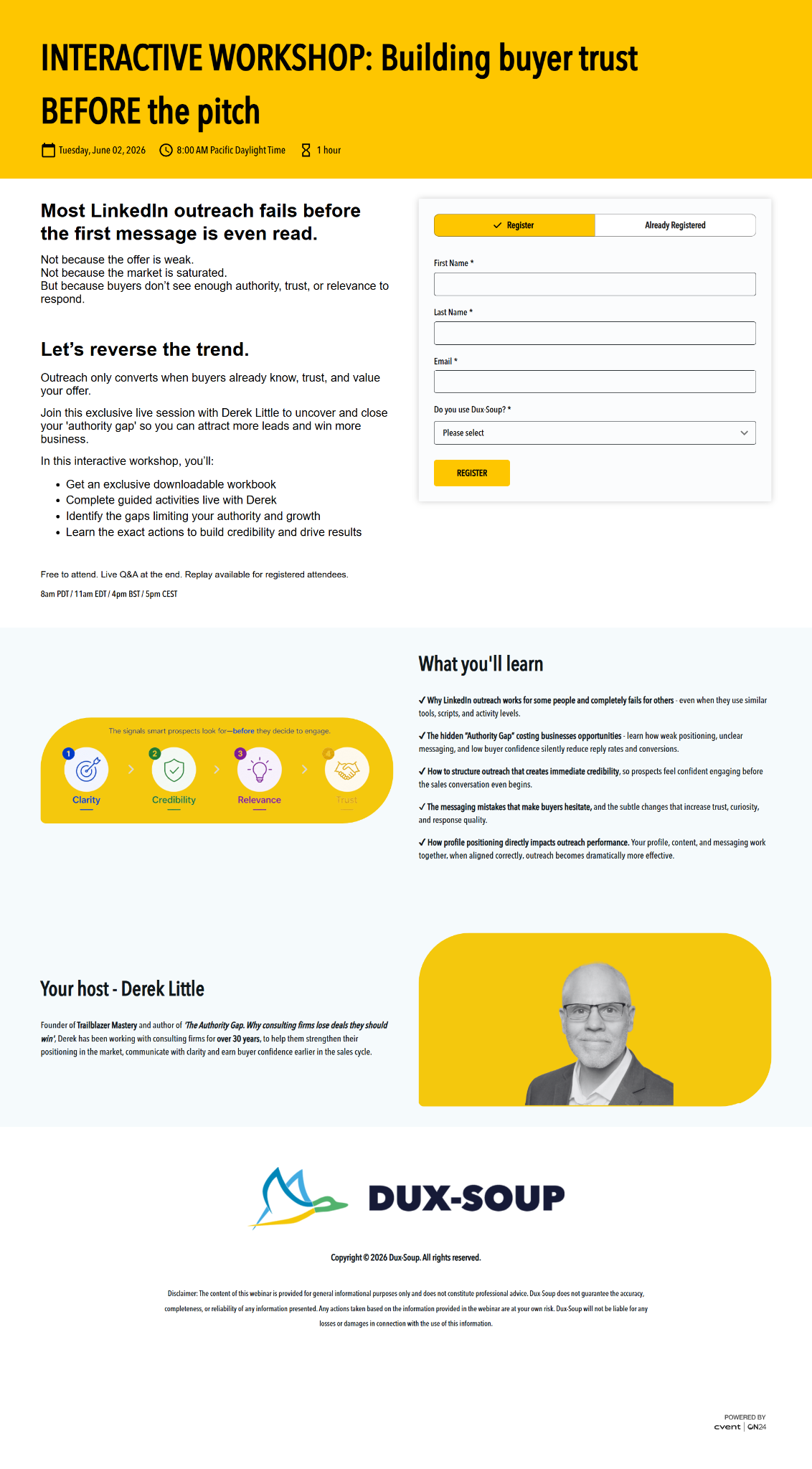
A practical workshop on why LinkedIn outreach fails — and how to build buyer trust before the pitch.
The session gave attendees a clearer way to diagnose their Authority Gap and identify what to fix first.
Instead of delivering another LinkedIn tactics webinar, I believed the audience would get more long-term value from an interactive workshop that reframed the problem. The focus was not just what people should do on LinkedIn. It was buyer interpretation: what prospects understand, believe, and trust before they decide whether to respond.
Can buyers quickly understand what we do and why it matters?
Do our messages connect to the buyer’s actual situation?
Do our signals create enough confidence to start a conversation?
The workshop was designed as a practical learning experience, not just a slide presentation. Attendees were supported with a workbook, diagnostic, results library, FAQ page, and follow-up article — giving them multiple ways to apply the ideas after the session.
Workshop deck — a clear teaching narrative for the live session
Workbook — guided exercises to help attendees apply the ideas
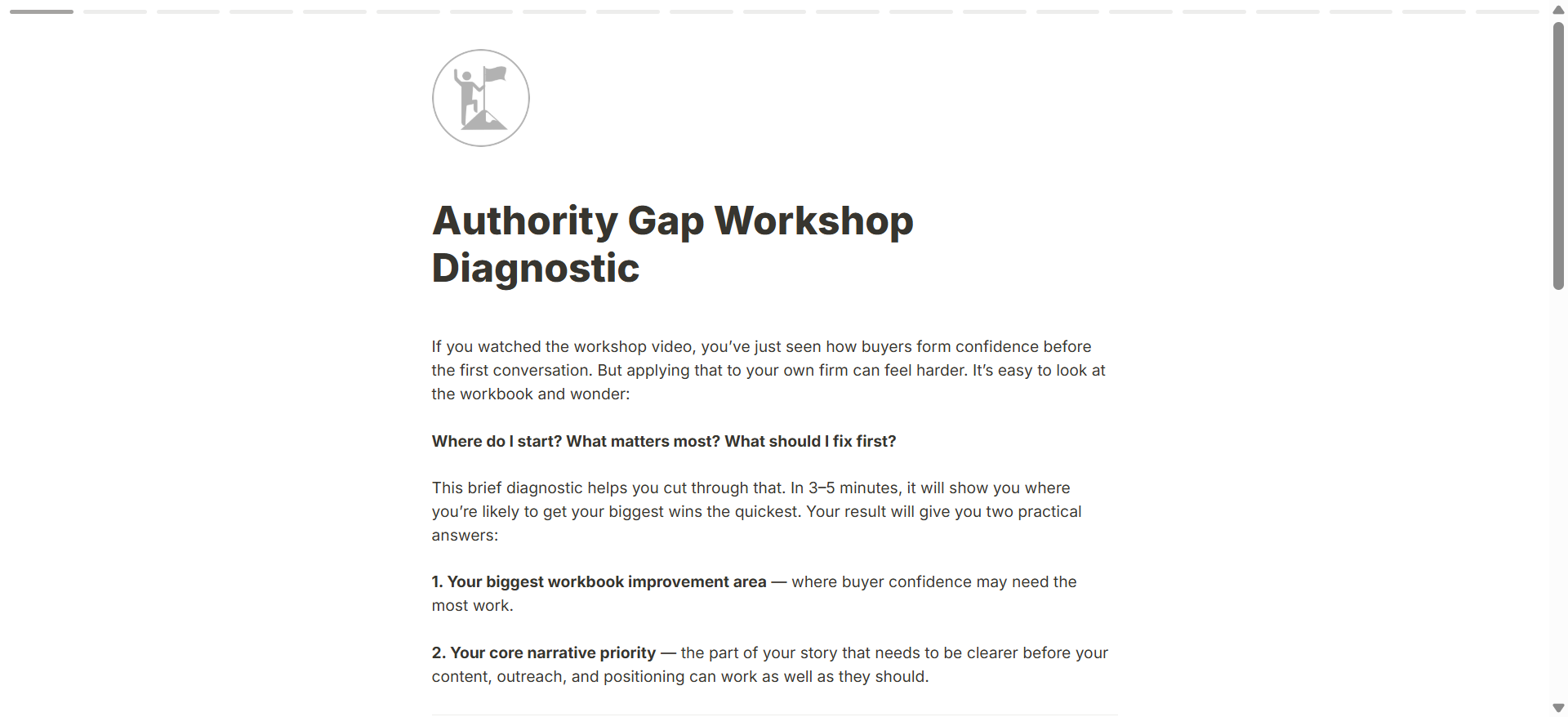
Diagnostic — a short assessment to identify what to fix first
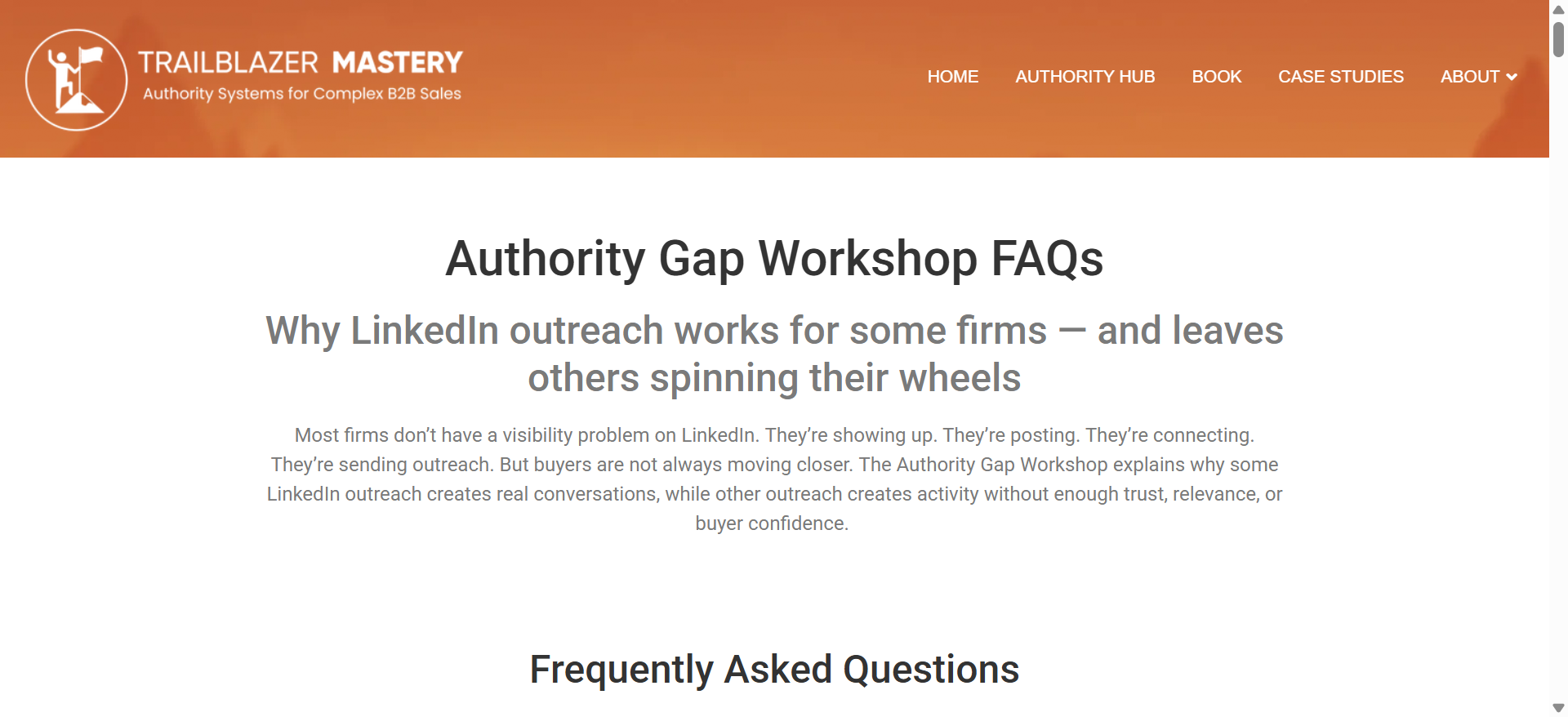
FAQ library — answers to common workshop questions
Results library — personalized next steps based on diagnostic outcomes
Follow-up article — additional education inspired by the live Q&A
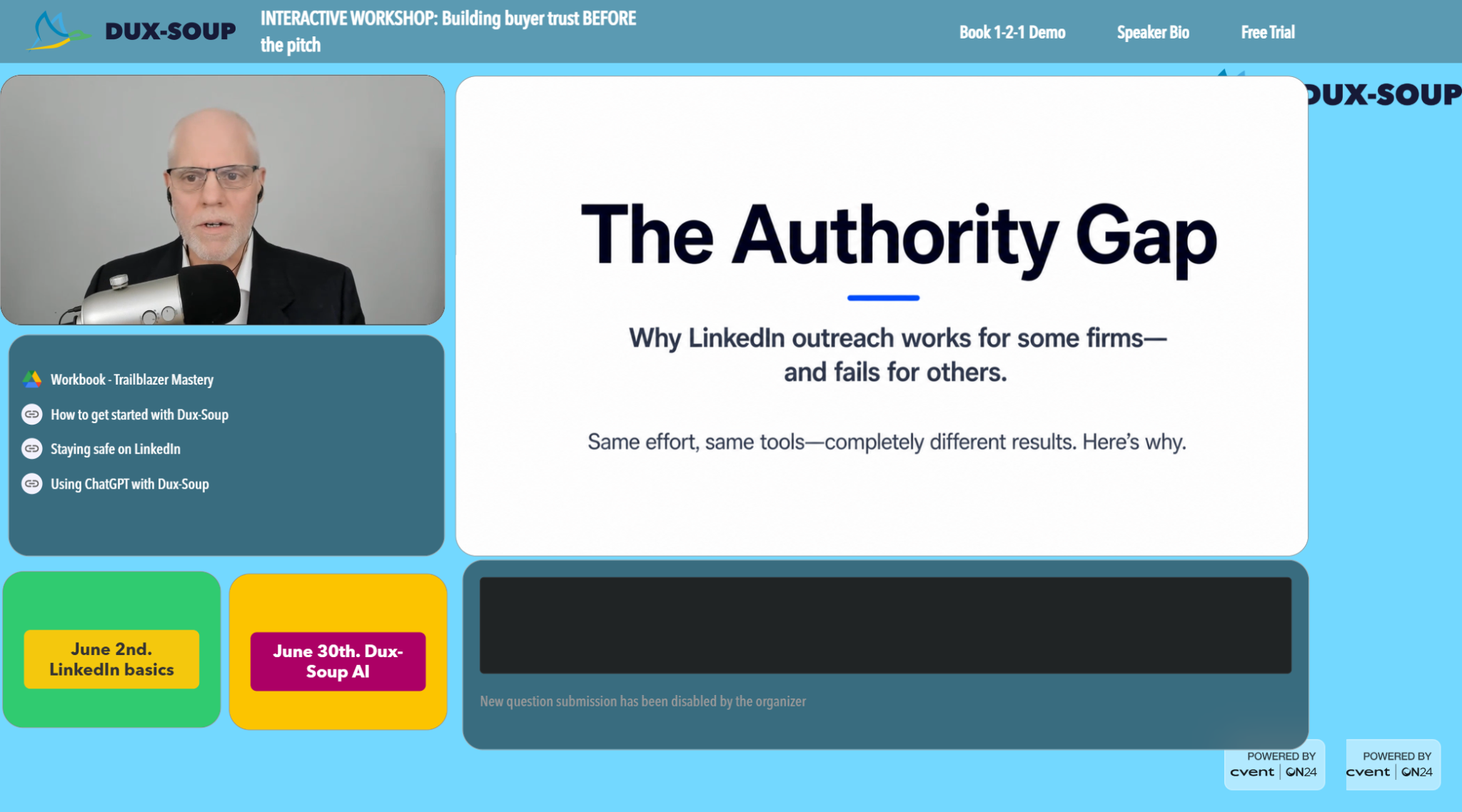
The live session was built around one central idea:
Deals are often won or lost before the first call.
Instead of focusing only on LinkedIn activity, the workshop helped attendees see how buyers interpret their profile, content, message, and follow-up before deciding whether to respond.
The outreach problem — why more activity does not always create more conversations
The Authority Gap — where relevance, credibility, and trust break down
The buyer’s perspective — what prospects need to understand before they respond
The workbook exercises — how to identify what needs to change first
Watch the On-Demand Workshop Now ↓
This workshop was supported by a complete set of learning assets designed to help attendees engage before, during, and after the live session.
Together, the landing page, promotional emails (created by Dux Soup), slide deck, workbook, diagnostic, FAQ library, and results library turned the workshop into a practical educational experience — not just a one-time webinar.

The workshop delivered a strong live turnout, with Dux-Soup reporting a 48% attendance rate after the session. It also created a clear post-workshop path. Attendees could continue into the diagnostic, review their results, explore the FAQ library, and use the follow-up resources to decide what to improve first.
48% live turnout rate — strong attendance for a partner webinar
29 diagnostic clicks — interest in applying the workshop ideas
2 diagnostic submissions — completed self-assessments
1 near-term opportunity — one respondent requested more information and indicated a 30–60 day hiring window
The most useful result was not just attendance. It was visibility into who was engaged, what they were struggling with, and who may be ready for a deeper conversation.
The strongest workshops do more than share information. They help people see their situation more clearly, understand what is getting in the way, and leave with a practical next step.
That was the goal of the Dux-Soup workshop: help attendees move beyond outreach activity and start improving the signals buyers see before the first conversation.
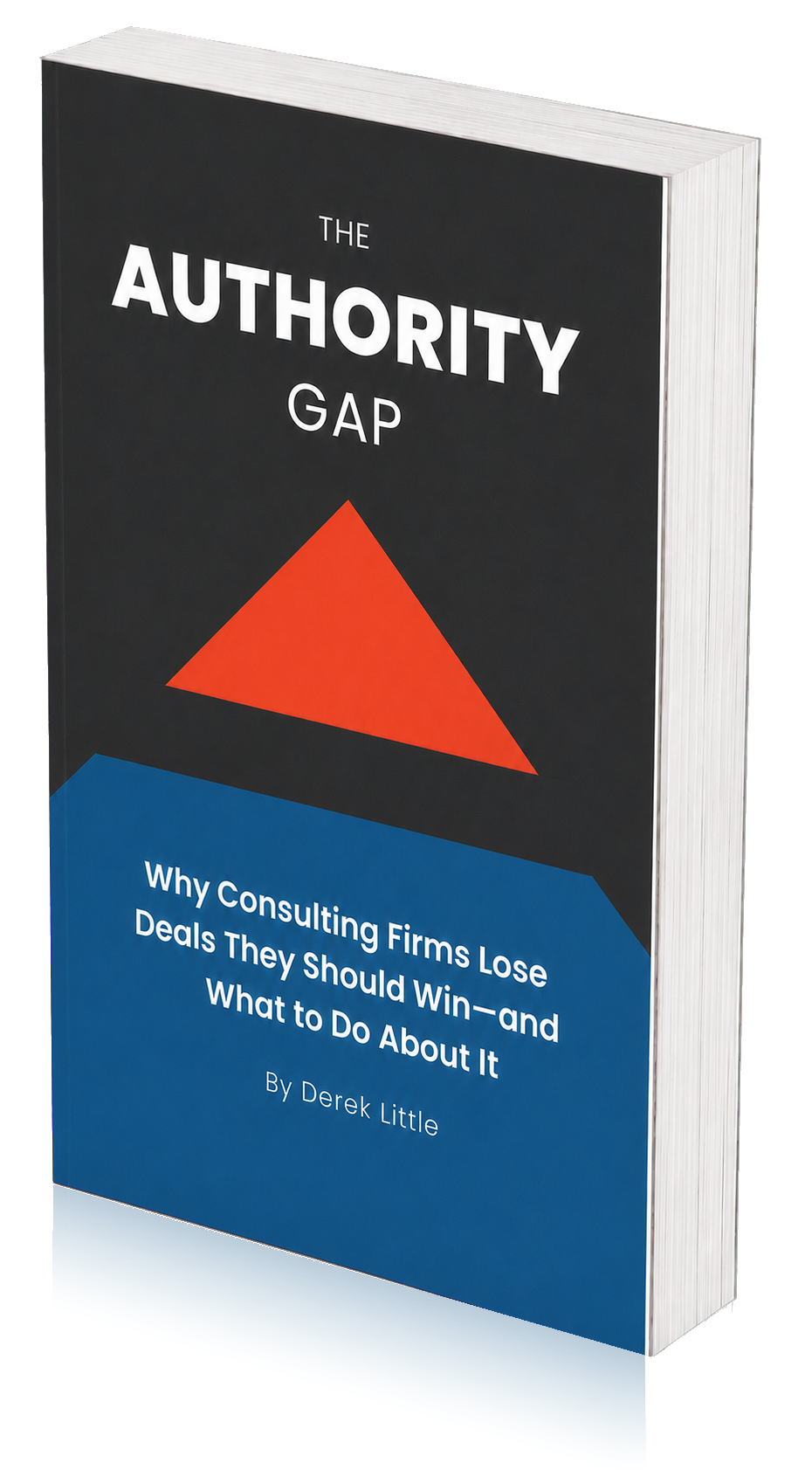
This case shows a core idea from The Authority Gap: activity does not create buyer confidence by itself.
LinkedIn outreach works better when buyers can quickly understand who you help, why the problem matters, and why your expertise is worth trusting.
The workshop turned that idea into an experience: first helping people recognize the gap, then giving them a diagnostic path to identify where confidence may be breaking.